

About
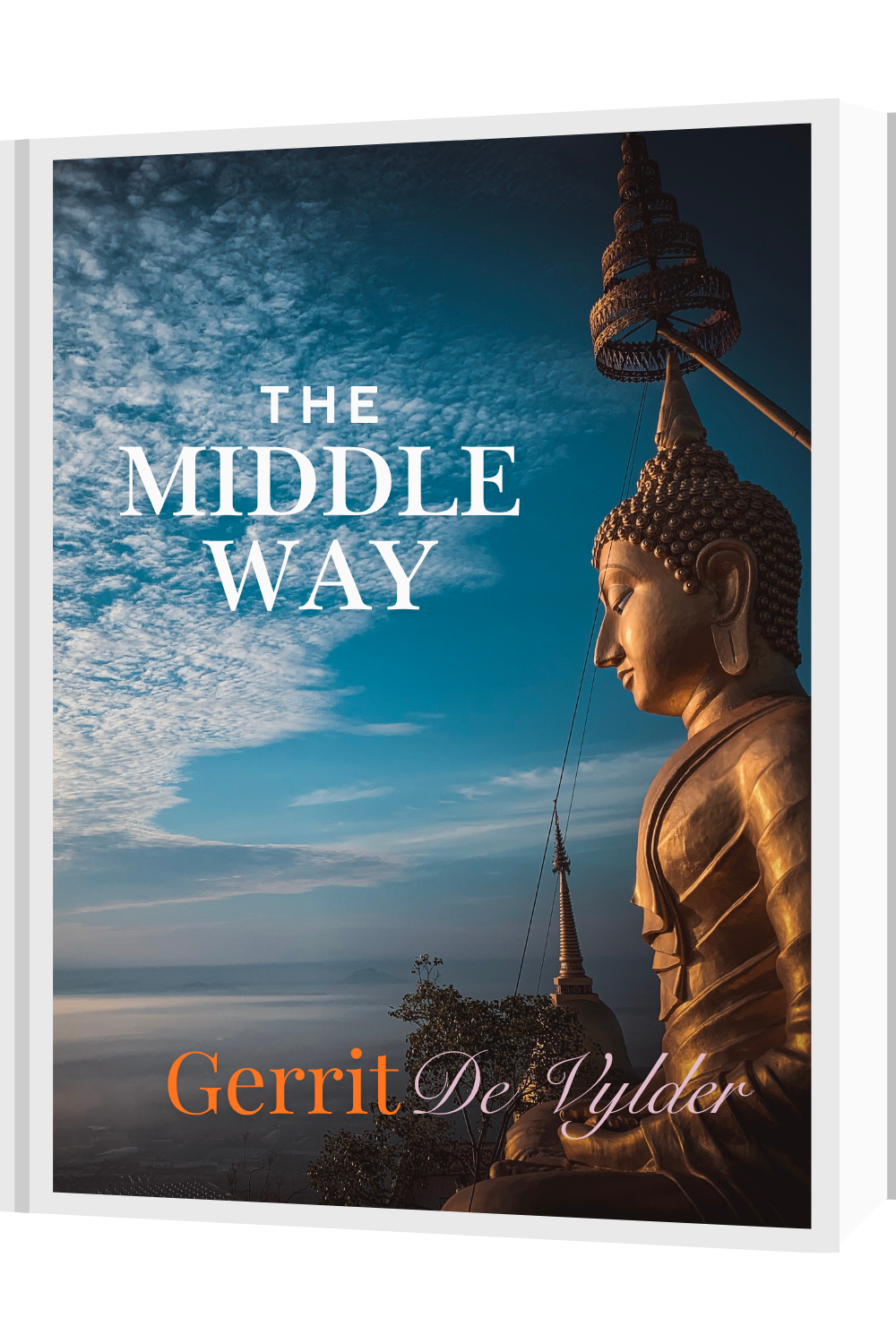
History demonstrates that “a good idea,” if not stopped at a middle point, as suggested by Buddhist (and other non-dual) Middle Way ethics, can become its opposite: “a bad idea.” History repeats itself because of fear, greed, ambition, and the need to control others and everything. This “Short Memory Disorder” has caused climate change. We argue that climate-neutral technologies, if left unchecked, may lead to another “bad idea.” Both Big Capital and Big Government are implementing technologies such as IT and AI and promoting them as climate-neutral. In reality, this enables the complete control of unaware yet willing human beings, much like in Aldous Huxley’s dystopia Brave New World.
While climate change receives attention, mind change is often overlooked. Storytelling (the passing on of experience and wisdom) is being replaced by story-selling (brainwashing that creates a false black-and-white perspective). Problems cannot be solved with the same thinking that created them. What is needed is a Middle Way, achieved through meditation, awareness, quietness, and ultimately leading to consensus.
Introduction
A common theme in Tibetan Thangka painting is the depiction of the different stages of Samatha, or “calming” meditation. It shows a monk chasing and finally capturing an elephant. The elephant, representing the mind, is led by a monkey symbolizing distractions. These distractions are of an extreme nature, such as addictions or highly emotional states. The theme suggests an alternative way “to capture the elephant”: a Middle Way to calm down, find a peaceful balance, become conscious of basic emptiness and the interdependency of everything, and eventually liberate oneself from an unreal world.
In this contribution, we suggest extending the concept of the individual monk to its collective dimension: human society and its history. They are like the monk who endlessly keeps chasing the elephant without ever catching it; without a Middle Way, humanity repeats the same mistakes endlessly.
We argue that history demonstrates how “a good idea,” if its implementation is not stopped at a middle point, becomes its opposite: “a bad idea.” Certainly, this applies to the industrial and technological revolutions. If they had been reconsidered and redirected at certain moments in history, they could have resulted in labor-saving technologies and better living conditions. Instead, spurred by greed and defended by a false interpretation of free trade, they resulted in the inhuman treatment of a new proletariat, market manipulations, and eventually the present climate crisis. Likewise, we argue that climate-neutral technologies, if left unchecked and not stopped at a certain point, may lead to another “bad idea.”
How can this vicious circle be stopped? We suggest that by choosing a Middle Way in decision-making processes, achieved through a Vita Contemplativa, extreme actions resulting in extreme outcomes—and therefore provoking further extreme reactions—can be avoided (Marinoff 2007: 73–103). A Vita Contemplativa allows us to identify greed, fear, and the need to control everything and everybody as the reasons why we cross the middle point and “go extreme.” It also opens the way to enlightenment and the release of illusions. The obsession with obtaining results is placed into its proper moderate perspective. The end never justifies the means.
The Buddhist-Huxleyan Middle Way
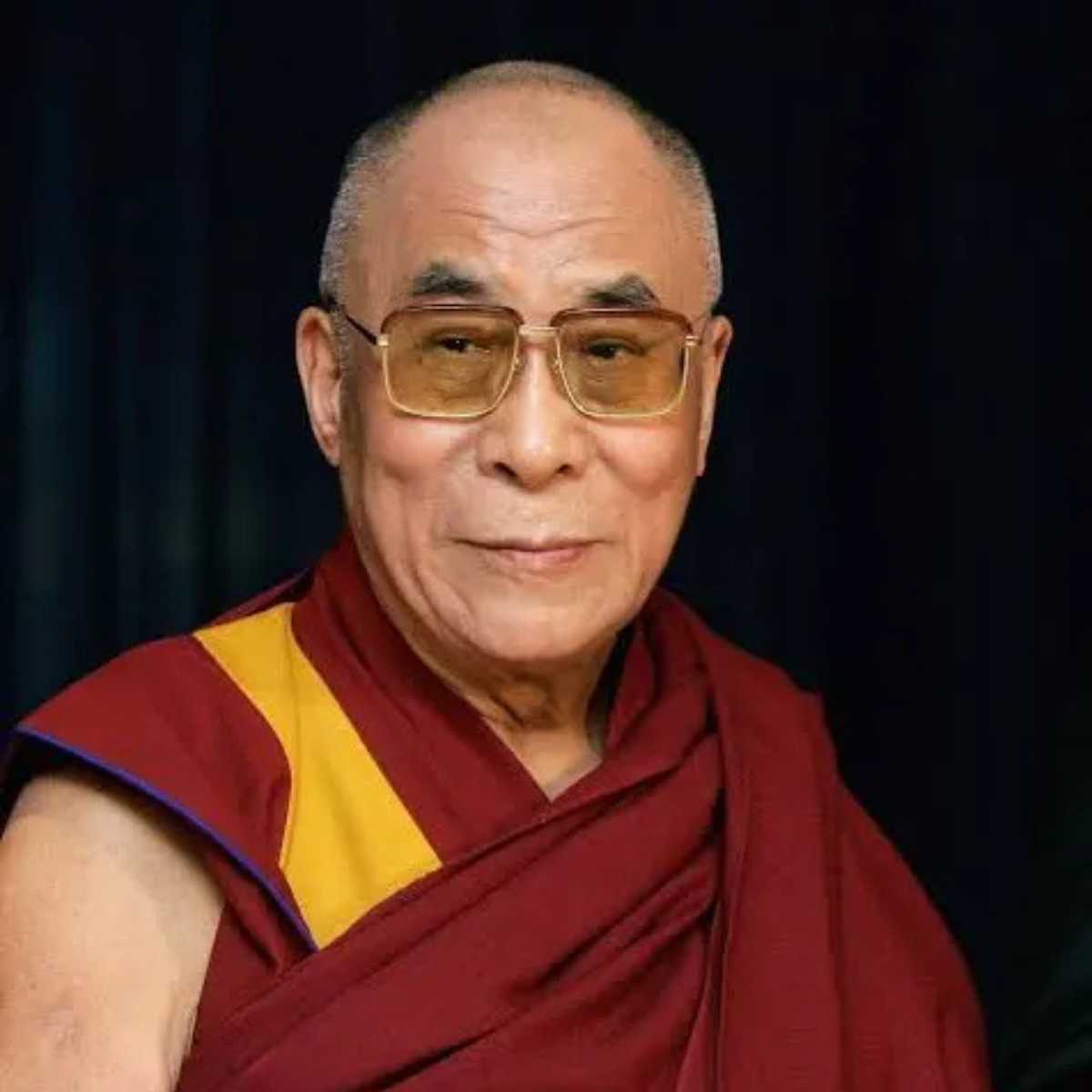
In this case study, we focus on the implementation of the Buddhist concept of the Middle Way. Buddhism, by emphasizing emptiness as liberation from an unreal world, places importance on intention rather than final outcome. As H.H. the Fourteenth Dalai Lama explains, “Emptiness does not mean nothingness... According to Nagarjuna [cf. infra], emptiness means interdependency or interconnectedness” (H.H. the Dalai Lama & Chang 2004: 144–145). English popular philosopher Alan Watts (2007: 61), expressing his Buddhist views, argued that true spirituality “is beyond good and evil—indeed, beyond any choice between things which may be regarded as opposites.” He further clarified: “All such opposites define one another mutually in such a way that there can be no final choice between them.”
Similar concepts are present in many other non-dual traditions. The Hindu scripture Bhagavad Gita suggests exploring all possible scenarios before making an ultimate righteous choice. After all, a choice never leads to a simple “white against black” situation, but rather to “a shade of grey.” The Gita then asks us to focus only on the action itself, not on its results. Advaita Vedanta, one of India’s philosophical traditions, points out that no action or “doership” is required to experience the phenomenal world as unreal. It suggests that the individual should be treated as an end in themselves, namely to identify him or her with Brahman, the only existing reality, and not as a means to other ends (De Vylder 2021).
Similarly, the Jungian tradition acknowledged that our ultimate selfhood unfolds through the resolution of conflicts such as yes and no, will and counter-will, affirmation and negation. Jung argued that “good and evil are not absolutes but man-made judgments dependent on the values impressed upon humanity by culture and religion.” He was dissatisfied with the view that “the good is within God, the bad outside God.” Instead, they “resemble a circle wherein going far enough in either direction is likely to associate one with the opposite polarity.” Jung concluded that “in the last resort there is no good that cannot produce evil, and no evil that cannot produce good” (Hoeller 2009: 79). These and other non-dual traditions contradict today’s rationalism and positivism, which often emphasize radical solutions and outcomes.
The Buddhist interpretation, popularized and explained by public figures such as H.H. the Dalai Lama (2006; 2024), is by far the most widely known. We argue that this Middle Way approach may not only prevent the excesses of an unchecked obsession with profits leading to climate change, but also prevent both Big Capital and Big Government from implementing Information Technology (IT) and Artificial Intelligence (AI) to exert complete control over unaware yet willing human beings, much as described in Aldous Huxley’s 1931 dystopian novel Brave New World (De Vylder 2019; Tufts 2006).
Huxley, inspired by Hindu-Buddhist philosophy, predicted a “brave new world”: a technocratic society in which humanity has lost identity, individuality, and freedom, all replaced by a false and artificial feeling of happiness. This scenario differs sharply from George Orwell’s dystopian novels Animal Farm (1945) and 1984 (1949), which reflect the twentieth-century realities of Nazism, fascism, and Stalinism, where the oppressed were fully aware of their condition. In Brave New World, humanity must choose, as Huxley states in his preface, between insanity (the artificial, unconscious, and technocratic brave new world) and lunacy (a savage reservation characterized by emotions and chaos, kept outside the new world).
The brave new world may reflect a future in which aspects of IT and AI—especially when promoted as climate-neutral—oppress willing and mind-controlled masses in invisible ways. Yet Huxley also hints at a third, “in-between” alternative, which could comfortably be identified with the Buddhist Middle Way.
Buddhism and the Philosophy of History: Historical Recurrence
Our methodology combines concepts from the Philosophy of History and Buddhism. First, a historical-critical reconstruction of the early period of Buddhism allows us to identify the original Middle Way principles and practices of Buddhist political economy from the sixth century BC to the second century AD (Chakravarthi 2004; Ilaiah 2001; Omvedt 2003; Kalupahana 2008). This includes the principles and policies of the Buddha himself and his first followers, organized in the Sangha or Buddhist communities (Mishra 2013; Carrithers 2005; Zimmer 2021: 464–559; Radhakrishnan 2016: 498–576), as well as the Indian emperor Ashoka (Rich 2017), the South Indian Mahayana Buddhist monk and philosopher Nagarjuna (2006), among others.
Second, we argue that breaking Samsara (illusory cyclical change) through Dharma (right behavior leading to an understanding of the true nature of things), usually interpreted in an individual context, can also be applied collectively as a theory within the Philosophy of History. Samsara then explains whether and why history seems to repeat itself. Cycles and rebirths resulting in suffering, or dukkha, correspond to the concept of Historic Recurrence, caused by a collective historical amnesia rooted in a Short Historical Memory Disorder. We tend to forget the long-term lessons of history.
It is remarkable that an important recent episode in climate history, the Little Ice Age from the sixteenth to the nineteenth century, is largely ignored by the media (Blom 2019). During this period, many glaciers in the Alps expanded significantly, the viticultural border moved southwards, and winters became harsh, as depicted in the snow landscapes of Flemish Renaissance painters such as Pieter Brueghel the Elder.
This idea of a Short Historical Memory Disorder was popularized by the Swedish pop group ABBA when they won the Eurovision Song Contest in 1974 with the song Waterloo, which included the line: “The history book on the shelf is always repeating itself.” The Middle Way approach (Dharma), however, offers release from both individual rebirth and historic recurrence, leading to Moksha (Liberation), both individually and collectively.
The Middle Way was first applied to the practical issues of the early Sangha. It suggested a path between asceticism and self-indulgence. It was also applied to metaphysical questions, such as finding a Middle Way between eternalism (samsara, as belief in an eternal self) and nihilism (maya, as the self being illusory). Likewise, a Middle Way was proposed between logic and mysticism or magic, both of which were—and still are—present in Buddhist experience from the Buddha’s time to the present (Van Schaik 2020).
It was also interpreted as a general method for judging the right way forward (Dharma) in any context: what may seem obvious in one time or place may not be so in another. Any dogmatic approach—religious, ideological, or scientific—is unhelpful because it prevents careful observation of people and events and hinders awareness of what they are actually like. This is achieved in a relatively free and genuine way because the Abrahamic belief in Original Sin, carrying with it an enormous sense of guilt and consequent false duty, is absent in Buddhist thought. All of this was expressed through the principles of the Sangha, which existed—and still exists—on two levels. On the micro level, it consisted of monks (bhikkhus) or renouncers from worldly life living in a monastic order. On the macro level, it consisted of lay followers or householders who supported the monasteries.
Clearly, Buddhism was a liberating movement reacting against Brahmanism, which consolidated casteism and the monopoly of Brahmins in spiritual and worldly affairs. Buddhism ignored Brahmanic rituals and high-caste membership. Everyone could attain liberation and Enlightenment (Moksha). The emancipation of caste, and to some extent gender, enabled the emergence of a merchant class that supported the monasteries. From this perspective, Buddhism resembled Protestantism in allowing the rise of capitalism. Buddhism’s monastic tradition, however, calls such a comparison into question. In Calvinism, becoming rich is a religious calling or duty, and faith is predestined. In Buddhism, possessing wealth is not itself an issue, but attachment to it can cause suffering (dukkha). The tool for approaching Enlightenment is the Middle Way.
The Middle Way is the basis for defining Buddhism’s socio-economic principles. Since 2008, these principles are arguably reflected in Bhutan’s Gross National Happiness Index (Masood 2016: 107–125). Labor laws guarantee adequate food and wages, care for the sick and elderly, and regular leave. A free market corresponds to a fair market, including equal control over the means of production. Economic development is encouraged because it can result in higher labor productivity, allowing leisure and free time to meditate and cultivate awareness. A practical use of time also allows spiritual activities that positively affect happiness (Galay 2008: 195–196). Finally, and sometimes neglected by researchers, Buddhism values private space and privacy because of their practical importance in a modern information society and their necessity for meditation and concentration (Hongladarom 2016: 74–107).
While the impact of Middle Way principles on Buddhist economics has been discussed by many scholars (Brown & Zsolnai 2018; Zsolnai 2011; Zsolnai 2016), their influence on socio-economic and political decision-making has received less attention. Already during the early phase of the Sangha, the principle of seniority in administrative offices—reflecting respect for experience and care for the elderly—was of prime importance. Another cornerstone from the very beginning was a Buddhist version of democracy. Contrary to the Western tradition of democracy, which was based on majority rule, all matters had to be discussed and contemplated with the objective of reaching consensus: a middle ground or way. This avoided a dictatorship of the majority. Voting was only a secondary option if consensus could absolutely not be reached. Arguably, the birth of democracy may thus be situated around the sixth century BC in India.
How does Buddhism suggest identifying a Middle Way? Its method is based on understanding the true nature of things. A combination of contemplation, reflection, mindfulness, and meditation allows us to understand the true “emptiness” of everything, implying interconnectedness. It is much like Korean-German philosopher Byung-Chul Han (2014) identifying a Vita Contemplativa: nurturing the ability to be inactive and thereby cultivating awareness, mindfulness, meditation, multidisciplinary understanding, deep insight, right perception, wisdom rather than mere knowledge, and quietness of mind.
This brings us to a contradiction of the first quarter of the twenty-first century. A Vita Contemplativa requires free or leisure time. It implies the right not to work. Certainly, much work today no longer allows time for reflection. There is no longer a balance between ora et labora. In theory, the present technological revolution—based on automation, digitalization, IT, AI, 5G, and cloud storage—should free humanity from the bonds of labor, facilitate socio-economic activity, and increase productivity. This should create more free time for a Vita Contemplativa, enabling greater critical reflection on life and society. Instead, the opposite is happening. Higher retirement ages, greater competition, stress, burnout, and depression are blocking attempts to increase awareness and reflection. The only conclusion may be that our present global financial and economic systems, as well as educational programs—especially in business schools—do not reflect economic reality.
Nothing has been learned from previous periods of rapid technological revolution. The absence of a Middle Way is once again leading to Historic Recurrence. Indian philosopher Krishnamurti (Lutyens 1974) and Aldous Huxley argued that all “-isms”—whether ideologies, scientific systems, or religions—are basically sound but eventually entrap their followers and invite their opposites. They become vicious circles and drift away from their essence. That is why Huxley identified spirituality (as opposed to institutional religion) as the only true liberation, the only path that invites a Middle Way. It avoids Friedrich Nietzsche’s warning: “He who fights with monsters should look to it that he himself does not become a monster... when you gaze long into the abyss the abyss also gazes into you” (Beyond Good and Evil, 1886; Terrin 2024: 56).
There are countless examples of how fundamentally sound and good ideas, if not guided by a Middle Way approach, result in their opposites throughout history. Democracy can decline into particracy or forms of majority totalitarianism. Free movement of people can lead to mass immigration and the erosion of local culture, although cultural protection is included in Bhutan’s Gross National Happiness Index.
Equality can evolve into total control of the population, as during La Terreur (1793–1794), when Maximilien Robespierre radicalized the French Revolution. Free trade can lead to unfair monopolies or oligopolies. Self-sufficiency, in its final phase, may require unproductive protectionism and monopolies. Campaigns against terrorism can rapidly erode civil liberties. Efforts to include youth in decision-making may result in infantocracy and disrespect for experience. Universal medical care may encourage the rise of Big Pharma and the decline of traditional medicine and preventive lifestyles. Attempts to feed the world can produce industrialized agriculture harmful to nature, humans, and animals. Last but not least, true spirituality can invite institutional religion, and with it, fundamentalism and judgment.
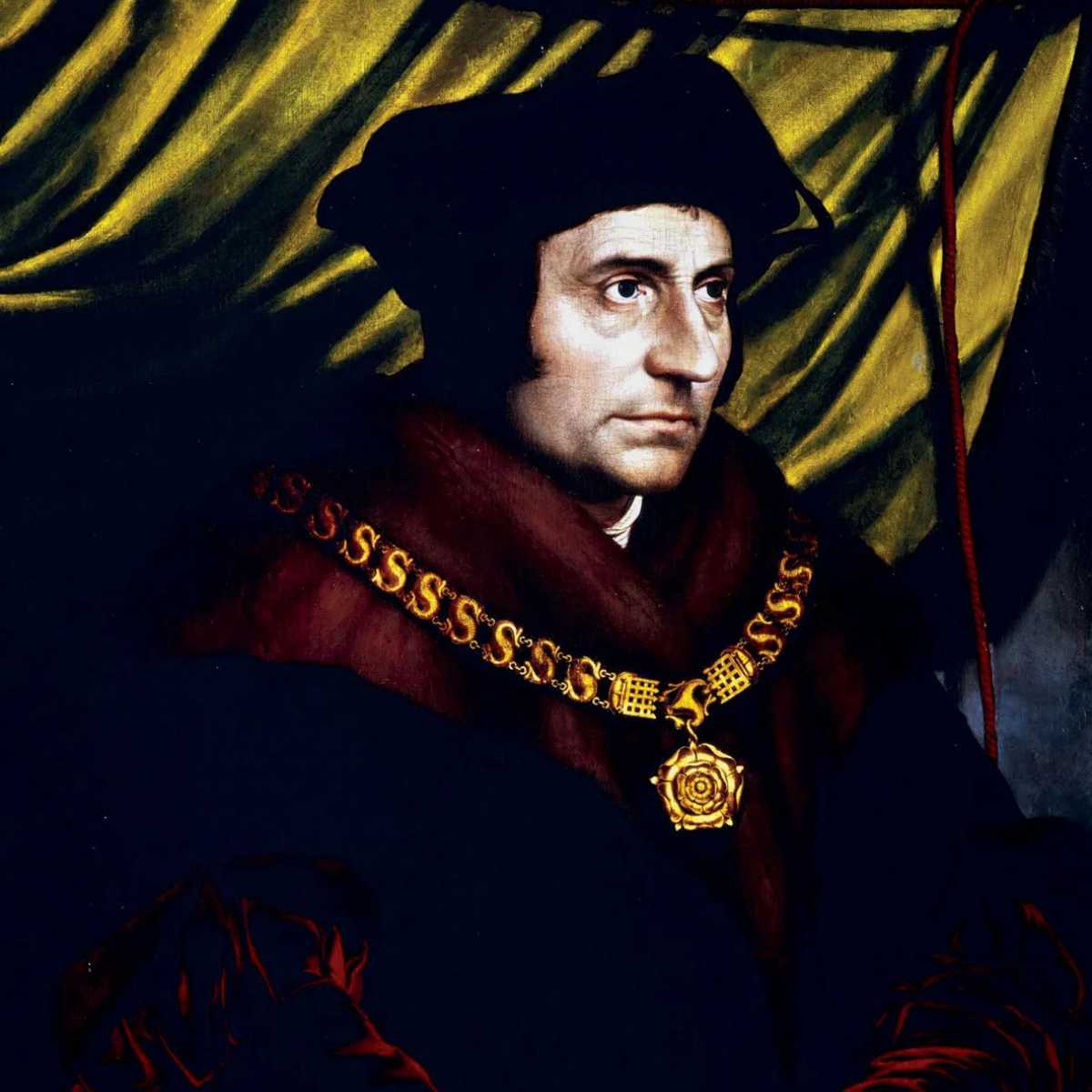
The Buddhist Middle Way and Historical Recurrence in the Twenty-First Century
Within the framework of this study, it is illustrative of how, throughout history, secularism has often resulted in a form of fundamentalist scientism. Secularism should be about being more realistic, moderate, and pragmatic—for example, in relation to climate change and pandemics. It should also guarantee equal rights to all opinions, philosophies, theories, and religions. Scientism, however, corresponds to an excessive belief in the power of scientific and medical knowledge and techniques. Science and medicine then become new dogmatic religions. This is clearly illustrated by how Big Capital, in collaboration with Big Government, monopolized and exploited technological revolutions that contributed to climate change. We argue that history is repeating itself in the way Big Capital, again in collaboration with Big Government, is now pushing an agenda of solutions to climate change. From this perspective, climate activism may result in Big Capital’s full control over a digitalized population, resembling a new version of a Huxleyan Brave New World. Historic Recurrence can be used by Big Capital to maintain control over a willing, digitized population and a Big (subsidizing) Government. Big Capital may exploit the fear that exists among the global population regarding climate change in order to divert attention away from efficient but less profitable alternatives. The solutions it promotes, such as AI, may create problems of the same magnitude as climate change itself. Climate technologies become new and highly profitable product cycles, prompting large corporations to impose “their” solutions through lobbying and persuasion.
This may ignore basic human needs and rights such as freedom of movement, social interaction, free speech, and privacy, especially for vulnerable groups. AI may be misused as a zero-climate-impact solution within a Brave New World: an invisible tool for increasing power over willing, digitalized populations. Only if a Middle Way between large-scale and small-scale development, and between private capital and government, can be realized, may genuine solutions emerge—solutions that prioritize individual needs and rights rather than the objectives of maximizing profit and control for corporations and governments.
However, a Middle Way approach would also support the application of the Precautionary Principle: even if absolute consensus among scientists is lacking, action should still be taken. The difference would lie in the process used to select the necessary actions. We suggest that this would involve identifying the sources of funding behind research into climate-neutral products and technologies. Can science ever be completely neutral, purely factual, and capable of accounting for all determinants? Are politicians aware that climate-neutral technologies may create new, highly profitable product cycles for Big Capital, and that human rights often conflict with the interests of both Big Capital (profit) and Big Government (control)?
A Middle Way approach can also be relevant for decision-making in other late modern issues such as terrorism, the weakening of local culture, new mass vaccination and lockdown methods, mass media invoking mass hypnosis, digitalization, biotechnology, the use of refined sugar and MSG in food, 5G, and genetically engineered crops. This list also includes geopolitical tensions, for which it may be useful to compare the Russian-Ukrainian conflict with the Sino-Tibetan conflict, Tibet having a specifically Buddhist motivation.
A contemplative Middle Way invites us to consider identity, ideology, knowledge, science, and research from broad philosophical and historical perspectives. It asks whether objective science and impartial judgment are possible when the main investors in research are either Big Corporations or governments strongly influenced by them. It also encourages consensus by acknowledging the responsibility of Big Capital not only in climate change, but in broader environmental, socio-economic, and political deterioration—for example through stricter antitrust legislation, revising Intellectual Property Rights, and guaranteeing the freedoms and rights of the individual consumer, which were achieved through the struggles of many generations. Too often, the exploitation of the working classes and farming communities during the Industrial Revolution from the eighteenth century onward has fallen victim to the same Short Historical Memory Disorder and is dismissed as outdated Marxist jargon.
We also observe that while climate change receives attention, mind change is overlooked. On the one hand, there is the outer world of our physical environment. Environmental degradation has been recognized by the scientific world since Rachel Carson’s 1962 publication of Silent Spring (Attfield 2013). This opened the door for many climate scientists to argue that we have entered an Anthropocene phase of history.
On the other hand, there is the inner world of the psyche. Carl Jung already argued that the inner world of the psyche is desacralized by technological utilitarianism. The “ecosystem of the mind” now faces disruption through data overload, drowning in information while longing for understanding (Slater 2024). The distinction between human and machine (AI) has become blurred, resulting in a deep absence of understanding. We are becoming disconnected from history, losing context and perspective. We are losing the narratives—the storytelling that binds communities together—replaced by story-selling in our contemporary information society (Han 2024). IT and AI are based primarily on logic. Logic does not care or feel, and it always depends on assumptions about what truth is. Humans, however, have the capacity to recognize such assumptions and to understand that theories are limited by time and place. AI does not possess this capacity. IT and AI operate through black-and-white or right-and-wrong frameworks, much like multiple-choice systems that can undermine critical and nuanced thinking. Only humans can feel a situation and interpret law rather than apply it mechanically. The Buddhist spiritual Middle Way suggests the importance of feeling and caring, grounded in awareness, mindfulness, and meditation, while also remaining logical and conscious of one’s emotions. This stands in contrast to AI, which depends only on logic and inputs.
The risk of abuse becomes especially great when AI is presented as climate-neutral. Prominent AI entrepreneurs, using channels such as the World Economic Forum, argue that “without AI we won’t meet sustainability goals and address climate change” (Siebel 2023). The aim risks becoming the creation of a “Brave New World of Artificial Intelligence,” entirely reversing Huxley’s original warning. Is this the ultimate excuse for the misuse of AI?
Concluding remarks
Problems cannot be solved with the same thinking that created them. What is needed is to go to the core of the problem, and then to the heart of the solution. The Middle Way is about adopting a higher and deeper perspective from within in order to reach genuine and holistic solutions. It begins with an “Inner” Middle Way.
In the context of climate change and artificial intelligence, we suggest that this would lead to greater awareness among public opinion and decision-makers that climate-neutral products often correspond to highly profitable new product cycles, inviting monopolization by Big Capital. As a result, the alternatives that are introduced may not be the best ones, but rather those that are most profitable and that have the greatest potential to increase control and limit freedoms through Big Capital and Big Government. This is a repetition of history and can only be avoided through a “higher” awareness and the adoption of a new “Inner” Middle Way of thinking.
Without a Middle Way, future society may resemble the one depicted in the 1973 American dystopian film Soylent Green, based on the 1966 novel by Harry Harrison. In the film, by the year 2022, the cumulative effects of climate change, pollution, and overpopulation have caused ecocide, leading to severe worldwide shortages of housing, water, and food. A solution is proposed through the alliance of a new “ecological” elite in charge of the monopolizing Soylent Corporation (Big Capital) and a strong authoritarian government eliminating privacy and freedom of movement (Big Government). The Soylent Corporation supplies “Soylent Green,” supposedly made from plankton, to a starving global population. However, at the end of the film, the protagonist famously shouts, “Soylent Green is people!” after his horrific discovery. The solution, it turns out, has become worse than the problem.
To remain critical, contemplative, and capable of finding a Middle Way, books must not be burned, as in François Truffaut’s 1966 dystopian film Fahrenheit 451, based on Ray Bradbury’s 1953 novel. The totalitarian government depicted in the film destroys literature, thereby suppressing both thinking and feeling. This resembles today’s story-selling—rather than storytelling—through manipulative marketing techniques.
Even if a new type of “Inner” Middle Way thinking spreads, it will remain true in practical terms that the Middle Way, or middle point, is different for everyone. Yet a genuine intention to seek a Middle Way may be the mother of all wisdom. In 2031, it will be one hundred years since Brave New World was written. One may hope that its warning was not in vain.
References
Attfield, R. (2018). Environmental Ethics: A Very Short Introduction. Oxford University Press. Blom, Ph. (2019). Nature’s Mutiny: How the Little Ice Age Transformed the West and Shaped the Present. London: Picador. Bregman, R. (2025). Moral Ambition: An Antidote to Apathy. London: Bloomsbury Publishing. Brown, C., & Zsolnai, L. (2018). Buddhist Economics: An Overview. Society and Economy, 40(4), 497–513. Carrithers, M. (2005; first edition 1983). Buddha: A Very Short Introduction. New Delhi: Oxford University Press. Chakravarthi, U. (2004). The Social Philosophy of Buddhism and the Problem of Inequality. New Delhi: Critical Quest. Dalai Lama (H.H. the), & Chan, V. (2004). The Wisdom of Forgiveness. New York: Riverhead Books. De Vylder, G. (2019). Aldous Huxley’s Anarchist Entrepreneurship Based on Spiritual Capital. In L. Bouckaert & S. C. van den Heuvel (Eds.), Servant Leadership, Social Entrepreneurship and the Will to Serve: Spiritual Foundations and Business Applications (pp. 351–372). Palgrave Macmillan. De Vylder, G. (2021). From Indian and Utopian Ethos to Management for Spiritual Growth. In S. Mukherjee & L. Zsolnai (Eds.), Global Perspectives on Indian Spirituality and Management: The Legacy of S.K. Chakraborty. Springer. Galay, K. (2008). Time Use and Happiness. In Gross National Happiness: Practice and Measurement: Proceedings of the Fourth International Conference on Gross National Happiness (pp. 169–206). Thimphu: Centre for Bhutan Studies. Han, Byung-Chul. (2024a). Vita Contemplativa. Hoboken, NJ: Polity Press. Han, Byung-Chul. (2024b). The Crisis of Narration. Hoboken, NJ: Polity Press. Hoeller, S. A. (2009; first edition 1982). The Gnostic Jung and the Seven Sermons to the Dead. Wheaton-Chennai: Quest Books / Theosophical Publishing House. Hongladarom, S. (2016). A Buddhist Theory of Privacy. Singapore: Springer. Kalupahana, D. J. (2008). Ethics in Early Buddhism. Delhi: Motilal Banarsidass Publishers. Lutyens, M. (Ed.). (1974). The Penguin Krishnamurti Reader. Harmondsworth: Penguin Books. Marinoff, L. (2007). The Middle Way: Finding Happiness in a World of Extremes. New York–London: Sterling. Masood, E. (2016). The Great Invention: The Story of GDP and the Making and Unmaking of the Modern World. New York–London: Pegasus Books. Mishra, P. (2013; first edition 2004). An End to Suffering: The Buddha in the World. Gurgaon: Penguin Books. Omvedt, G. (2005). Buddhism in India: Challenging Brahmanism and Caste. New Delhi–Thousand Oaks–London: Sage Publications. Radhakrishnan, S. (2016; first edition 1923). Indian Philosophy (Vol. I). New Oxford University Press. Rich, B. (2017; first edition 2008). Ashoka in Our Time: The Question of Dharma for a Globalized World. Penguin Books. Siebel, Th. (2023, January 5). Without AI, We Won’t Meet ESG Goals and Address Climate Change. World Economic Forum. Slater, G. (2024). Jung vs Borg: Finding the Deeply Human in a Posthuman Age. Arroyo Grande: Winter Press. Terrin, J.-J. (2024). Mondes souterrains: Avant-gardes et art contemporain. In A. Estaquet-Legrand, J.-J. Terrin, & G. Verbeke (Eds.), Mondes souterrains (pp. 54–63). Lens–Paris: Louvre-Liénart Éditions. Tufts, C. (2006). Siddhartha Savage: The Importance of Buddhism in Huxley’s Brave New World (Unpublished master’s thesis). University of Saskatchewan. Van Schaik, S. (2020). Buddhist Magic: Divination, Healing, and Enchantment Through the Ages. Boulder: Shambhala. Villa, D. (2023). Hannah Arendt: A Very Short Introduction. Oxford University Press. Watts, A. (2007; first edition 1972). In My Own Way: An Autobiography. Novato: New World Library. Zimmer, H. (2021; first edition 1951). Philosophies of India. New Jersey: Princeton University Press. Zsolnai, L. (Ed.). (2011). Ethical Principles and Economic Transformation: A Buddhist Approach. New York: Springer. Zsolnai, L. (2016). Buddhism and Economic Development. In G. D. DeAngelis & T. Lewis (Eds.), Teaching Buddhism (pp. 344–360). Oxford University Press.