
Books

Latest Publications

Discover thoughtful writings on economics, history, philosophy, travel and society.

Historical, Philosophical and Socio-Economic Perspectives.

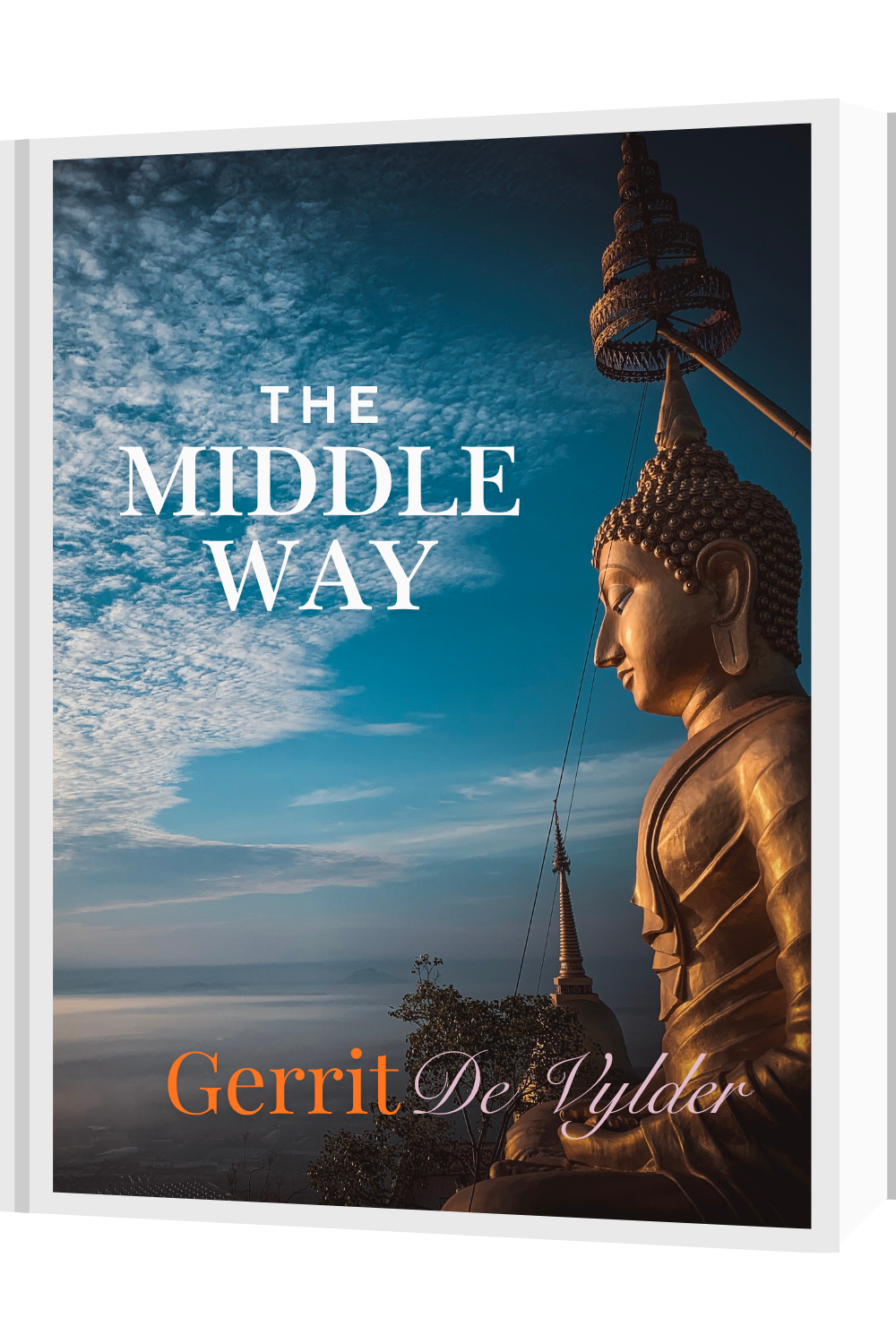
The Middle Way

Awakening to the Middle Way in Economics & Society

The Middle Way

The term Middle Way rejects extremes in approaching both individual and collective issues. Among others, the Buddha promoted moderate, skillful approaches. In economics and society, this refers to finding a middle ground between big and small scale, between government and private sectors, between specialization and the “big picture,” between freedom and ethics, and between long-term and short-term perspectives. Currently, the Middle Way is lost. We proceed from one extreme to another, losing the sense of balance and consensus.

References to the Middle Way occur frequently in Nondualism (or nonduality). Nondualism argues that reality is not divided into separate entities, but is an indivisible, unified whole. It originates from Indian traditions like Advaita Vedanta and Buddhism, but is also present in Sufism, Taoism, mystical Christianity, and A Course in Miracles (radical nondualism). It suggests that the perceived separation between subject and object, or self and world, is an illusion. The experience of perceived reality is illusory and addictive.

This illusion manifests itself through Historical Recurrence, suggesting that “the history book on the shelf keeps repeating itself” (ABBA song Waterloo, 1974). Similar events, patterns, and societal dynamics reoccur throughout history, driven by consistent aspects of human nature such as ambition, greed, and fear. Decision-makers suffer from a Short Historical Memory Span Disorder. Every good intention is driven to its extreme and becomes its opposite: a bad outcome. Reacting to this bad outcome starts a new, similar vicious cycle. While Historical Recurrence occurs on a collective level, reincarnation (in this life or, arguably, in the next) occurs on an individual level.

Collectively, mindfulness may influence or reduce Historical Recurrence. Mindfulness is the intentional, non-judgmental attention to the present moment, acting as a practice to cultivate awareness.

Mindfulness is arguably an aspect of Perennialism (philosophia perennis), suggesting that all great religious and spiritual traditions originate from a single, timeless truth. It emphasizes a “transcendent unity” underlying religious differences, through which individuals can connect to a divine ground or eternal self.